Mallika Tower, Near Ram Mandir, Bhandara

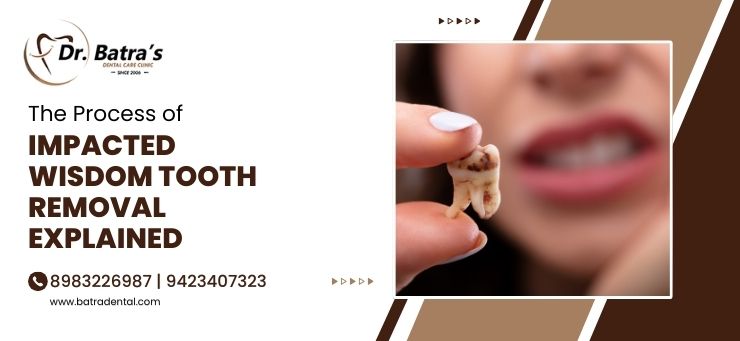
You’re sitting at dinner, chewing carefully on one side of your mouth. There’s that dull pressure again. It’s not exactly pain, but it’s not comfortable either. A few days later, your jaw feels tight. Maybe your gums at the back are swollen. Food keeps getting stuck there.
Then someone says it.
“Sounds like your wisdom tooth is troubling you.”
Wisdom teeth have a dramatic reputation. And when they become impacted, meaning they are stuck under the gums or growing in the wrong direction, they can create real problems. That’s why we offer effective wisdom tooth removal in Bhandara at Dr. Batra’s Dental Care Clinic, helping you relieve discomfort and protect your overall oral health before things get worse.
If you are feeling anxious or confused about the process, this guide will walk you through everything step by step in simple, clear language.
Let’s simplify it.
An impacted wisdom tooth is a tooth that:
Instead of coming out straight like other teeth, it stays partially or fully stuck.
This can lead to:
Not every wisdom tooth needs removal. But when it becomes impacted and starts causing issues, extraction is usually recommended.
Before any procedure begins, the dentist examines your mouth carefully.
At Dr. Batra’s Dental Care Clinic, the first visit usually includes:
The X-ray is important because wisdom teeth are often hidden under the gums. It helps the dentist plan the safest way to remove it.
This step makes wisdom tooth removal a planned and precise procedure rather than a guesswork process.
Many people worry about pain. That’s completely natural.
Here’s what usually happens before removal:
The numbness ensures you feel pressure but not sharp pain.
The dentist explains the steps clearly so you know what to expect. Knowing what’s happening reduces anxiety significantly.
If the tooth is fully visible, removal is simpler.
But in impacted cases, the dentist may need to:
This sounds serious, but it’s done carefully and precisely.
The goal is simple:
Create access to remove the tooth safely without damaging nearby structures.
Sometimes, an impacted tooth is large or positioned awkwardly.
Instead of pulling it out in one piece, the dentist may:
This reduces pressure on the jaw and makes the process smoother.
It’s a technique that makes modern wisdom tooth removal in Bhandara at our clinic much safer and less traumatic compared to older methods.
After the tooth is removed:
These stitches are often dissolvable. If not, they are removed during a follow-up visit.
The entire procedure usually takes between 30 to 60 minutes, depending on complexity.
Once the numbness wears off, mild discomfort is normal.
You may experience:
But this is temporary.
The dentist prescribes:
Most patients recover within a few days to a week.
Proper aftercare makes healing faster and smoother.
Here are important tips:
Also:
Following instructions carefully reduces complications.
Not every wisdom tooth needs extraction. But you should consult a dentist if you notice:
Delaying removal can cause:
That’s why early consultation matters.
Choosing the right place makes a huge difference.
Patients often look for the best clinic for wisdom tooth removal in Bhandara, and experience plays a key role.
At Dr. Batra’s Dental Care Clinic, the focus is on:
An experienced and calm approach reduces fear and ensures smoother recovery.
Many patients specifically seek the best dentist in Bhandara when facing impacted wisdom tooth problems because expertise gives peace of mind.
Impacted wisdom teeth rarely fix themselves.
Ignoring symptoms may lead to:
Early removal is often easier than waiting for complications.
That is why many patients opt for timely wisdom tooth removal instead of managing repeated discomfort.
Let’s address something important.
Dental fear is real.
The word “surgery” creates anxiety. But modern dental procedures are controlled, precise, and patient-focused.
When you know what is happening, why it is happening, and how long it will take, your confidence increases.
At Dr. Batra’s Dental Care Clinic, patients are guided step by step so they feel informed and comfortable.
Once healing is complete:
Many patients say they wish they had done it earlier instead of tolerating discomfort for months.
The relief after proper treatment is noticeable.
Impacted wisdom teeth are common. But they should not be ignored.
Understanding the process removes fear. When you know that:
It becomes less intimidating.
Modern wisdom tooth removal in Bhandara at our clinic is safe, structured, and designed to minimize discomfort.
If you have been delaying treatment because of fear or uncertainty, remember that impacted wisdom teeth rarely resolve on their own. The longer you wait, the more complicated the situation can become.
With proper evaluation and careful planning, wisdom tooth removal in Bhandara can be a straightforward procedure that protects your overall oral health. At Dr. Batra’s Dental Care Clinic, patient comfort and safety remain a priority at every step.
Taking timely action today can prevent severe pain tomorrow and help you return to eating, speaking, and smiling without discomfort.